Monday, 19 March 2018

The power of perspective: reflections on #DUKPC and #DUKPCInsider


Perspective is a powerful tool. One that is often undervalued or underused, but in the last few days at both the Diabetes UK Professional Conference (#DUKPC) and the Diabetes UK Professional Conference Insider (#DUKPCInsider) event it was great to see things being looked at from and by different people.


The last few days have, for me, been enlightening. Not just because I learnt so much from the lectures I attended, but also because I got a brief 'glimpse' of the drive and effort of so many of the Healthcare Professionals working within the field of diabetes. As a bonus - I also got to meet many of these wonderfully determined clinicians, nurses and diabetes professionals who are trying to push care and standards forward for not just their own patients, but for the patients of the NHS as a whole.


From the first day of the DUKPC, where Chris Askew set the scene for the next few days - making the great decision to mention the DUKPCInsider event that was running on the Saturday and how it would be bringing the highlights of the conference to those living with diabetes. On the same day Simon Stevens the CEO of the NHS announced that £40 million pounds was being allocated to continue the work of 2017/2018 - a significant moment for all who were there! Then came the opportunity for the audience to ask Simon Stevens, Jonathan Valabhji and Partha Kar questions...a chance for the Healthcare Professionals in the room to clarify, question and ask the Panel for further detail which they grabbed with both hands. For an 'outsider' (in terms of not being a Healthcare Professional myself) watching numbers of the audience stepping up to the microphone, it showed me the passion and drive of the Healthcare Professionals to want to deliver the best care they possibly can. Seeing this format where speakers gave opportunities to be questions was echoed throughout every session I was a part of – a really good approach for engagement and to help those in the sessions cement their ideas on how to drive through changes where needed.
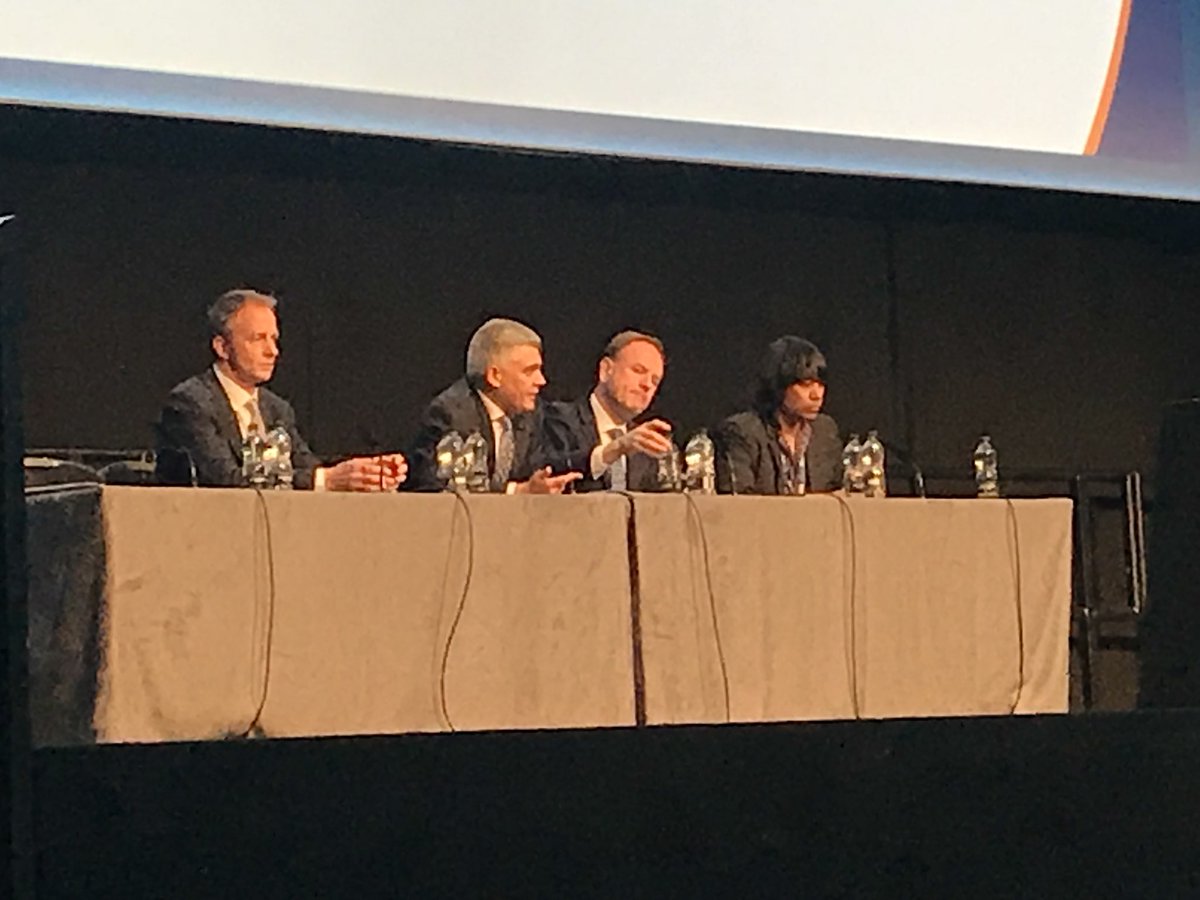

Following on from the strong start to the day, I tried to cover as many sessions as I could. Keen to find out as much as possible about the work going on around the UK. This was an approach I took for the whole 3 days of the first conference and even to the Insider event. I wanted to make the most of the access to research information by speaking to the presenters and discussing it in the breaks.

So what sessions did i go to? Well let's just say that I covered an array of topics over the whole conference including the session on the REPOSE trial, a lecture on ‘Getting the measure of diabetes’, Diabetes education (self-management) and the ABCD Type 1 Diabetes Clinical Collaborative-UK sessions just in the first day. On day two I attended other sessions including but not limited to a lecture on ‘getting the diagnosis right’, infection in the diabetic foot, Education in diabetes and closed-loop systems. The final day saw me joining the first session on sleep followed by lectures on immune pathogenesis of Type 1 diabetes, translating DiRECT into practice, TZDs, social media and patient engagement, Technology updates and ‘exercise and diabetes’.

This is by no means an exhaustive list...with so many other sessions attended, with some run by the diabetes technology companies.

To try and cover everything I learnt, heard and discussed over the 3 days of the DUKPC would be nigh on impossible, but what I can share are the feelings, key themes and ‘take-home’ messages from both the speakers and the whole conference. So here it goes...

1. The research is happening...and not just in a lab! 
Throughout the whole conference, there was an extraordinary focus on the developments and roll-out of research from the laboratories to trials with patients. This is not to say that there isn't some wonderful and extensive research going on in the universities and laboratories in the UK and around the world, but more to say that 'real-life data' was a buzzword of many sessions with patient's being a huge focus in rolling the trials of various approaches out into the lives of others living with diabetes.

2. Technology is here to stay
There were many sessions on CGMs, insulin pumps and closed-loop systems throughout the conference which was great to hear and be a part of, as well as the launch of the Diabetes Technology Network who also shared good practice guides at the event. However, it was recognised that it has to the right technology for the right person.
This is where technology being looked at in the wider sense of the word became a big focus of a few presentations with Apps, Social Media and digital approaches being mentioned as the future approach for Healthcare Professionals to engage with patients and for our own self-management. It was also uplifting to hear charities such as Diabetes UK being recognised as one of the driving forces in helping patients access appropriate technology as well as #gbdoc amongst other hashtags and communities being mentioned during the 3 days too!

3. Psychological support is needed, in all its forms...
For those of you with diabetes, this will one will most probably not come as any surprise, however it was refreshing to hear from various Healthcare Professionals first-hand that they appreciated the need for additional psychological support within diabetes care. Additionally, they also recognised the huge role that peer-support, whether online or face-to-face plays in this, with ‘meet ups’ for those with diabetes being referred to on a number of occasions as a mechanism for this peer support and shared-understanding.

4. Education - the key to success
Education was mentioned as a subject on its own in a few sessions (education for professionals as well as structured and self-management education for people with diabetes). Furthermore, as I travelled through a variety of different sessions, education seemed to be mentioned time and time again. There are many strengths to the education provided currently, however there were suggestions and ideas proposed about the use of digital platforms in disseminating information, as well as the different methods that education can take - whether self-directed, led by people with diabetes or through online Apps and portals. Whatever the mode chosen, it was agreed and even voted on in one session (through a show of hands) that education is key for everyone and that through it, the best approaches/ care and use of the correct tools and technologies can be unlocked.

5. Patient involvement is important and essential
Whether it's trials of new approaches, local studies, psychological support or professional education - people with diabetes were seen as the pivotal part to this. Sharing our experiences and day-to-day tactics, the 'trial and errors' we go through, 'the good, the bad and the ugly' of our diabetes journeys as well as the great approaches and attention that we receive for different elements of our diabetes care. Our unique perspective was respected and acknowledged, with some of the talks with the most impact being those that involved both a Healthcare Professional and a person with diabetes talking side-by-side on the same topic.

As you would expect, these points above were replicated to one degree or another in the DUKPCInsider event on the Saturday.
The speakers at this event were again from a range of backgrounds with differing areas of expertise within the field of diabetes. I think that there was a great spread of topics relating to the DUKPC with sessions relating to people in all parts of their diabetes journey and interests – diabetes and pregnancy, psychological support and Type 2 diabetes, the tech revolution, diagnosis matters, DiRECT route and Social Media being just a few of the sessions.


Again, the opportunity to ask the speakers questions was a highlight of the session with a full 25 minutes of questions from the audience for the Panel at the end of the day.

Also, like to the DUKPC, there were a mix of people with diabetes and Healthcare Professionals delivering talks which proved to be a popular approach.


From a personal perspective, I again learned a lot from this conference from hearing different sessions to those I attended, by hearing the Q&A sessions and by sharing experiences with both the people with diabetes in the room and the Healthcare Professionals who sat and chatted.

DUKPCInsider was a great event and success in my personal opinion – I hope that Diabetes UK build on this and run a similar event next year to compliment and feedback from the DUKPC!

To round off my post, I would like to say that I am very grateful to Diabetes UK for allowing me to attend both of these conferences and would like to thank them for all their support, from start to finish.

I would also like to say a personal thank you to Chris Askew and to Dai Williams for their support throughout the conference. Additionally, I would like to thank the many, many Healthcare and Diabetes Professionals who gave up their time to chat to me and to have the occasional selfie, or two.
Thank you all for the amazing work you do and your enthusiasm to keep striving forward!


Once again, thank you to all the lovely people who have been messaging me and engaging with my tweets throughout my time at the conferences. I hope I did you proud… x


Sunday, 31 December 2017

2017 Reflections - a busy year

*DISCLAIMER - Please note in this article I am purely referring to Type One Diabetes and my personal views in relation to the Animas Vibe as well as my own personal experiences of NovoRapid and Fiasp. Remember Your Doses May Vary and all information found in this blog post is my opinion and is what works for me ONLY. It is not intended as medical advice. Please consult the relevant health care professionals before you make a change to your treatment plan in any way*


Well it's been a while hasn't it....

This year has certainly been one of ups and downs...and I'm not even talking my diabetes. There has undoubtedly been a lot going on with job changes, buying a house, family illness, house renovations to name but a few. Oh, and then of course there's the diabetes to throw into the mix.


Well after the HUGE transformation that the insulin pump made to my life back in July 2016, I would love to say that it's been smooth sailing ever since. In reality though - that just isn't diabetes now is it?


Despite my control being vastly improved from the 49 hypos a month.... (that’s right...49 a month!!) that I was having prior to starting Insulin Pump Therapy (IPT), I had still been having a few night hypos and some before meals. As a result, I trialled the Dexcom G4 sensor in the hope that the CGM link-up to my Animas Vibe pump would help with the night time hypos. Unfortunately, despite a number of attempts to use the Dexcom, for some reason I cannot get on it with. After seeing some amazing results from other people using it, I was sadly disappointed to have many false alarms and very inaccurate readings on every sensor, despite trying different sites. 

As a consequence, I intermittently used the Abbott Freestyle Libre to gain an insight into the patterns of my diabetes during those 2-week periods.
Although, as many will point out, it doesn't have the full features of CGM's such as the alarm functions or insulin suspension option, the accuracy that I get from using the Libre made it a much more reliable method of gaining continual, uninterrupted data.

I didn’t just look at the CGM/ Flash Glucose Monitoring options in isolation though. I also looked at the effects of how my recently developed (past 2 years) insulin-sensitivity affected my control. One major issue I kept facing was the difficulty of pre-bolusing at the correct time before a meal. This was particularly problematic when eating out at a restaurant or when eating at other people's houses. I would find that I would often hypo before the meal arrived, meaning a lot of explanation as to why I was eating just before we were about to eat. Step up FIASP!!!


Fiasp (a form of faster acting insulin) despite eliminating the vast majority of pre-meal hypos in a short space of time, it did take a couple of weeks to adjust to. One of the major adjustments I had to make was lowering the amount of insulin I needed for meals. It seemed, that with the differing profile of Fiasp and also not needing to pre-bolus before eating food meant that I didn't need quite as much insulin as I previously did. Conversely, I had to increase my basal rate slightly to keep my levels within the desired range. These adjustments were aided by the use of the Libre in the first few weeks of transitioning to Fiasp. Again, I am aware that a number of people have had difficulty adjusting/ using to Fiasp, however I have personally found it really beneficial.

And this was only half way through 2017...

Although some of hypos previously mentioned were still happening and my diabetes levels were erratic at times, progress was being made bit by bit. Pre-meal hypos had now been addressed!

Despite all the above, there was still another big step forward towards better diabetes management to come thanks to some hard work of a group within the NHS.

On 1st November 2017, the Abbott Freestyle Libre sensors became available on the NHS to those who meet the criteria. Despite some inevitable teething issues, as is often the case with new drugs and change, almost 2 months in there are a number of people around the UK who are benefiting from this prescription introduction. I am very grateful to be one of these people who has been massively helped by 6 weeks’ worth of data, patterns and invaluable information that I’ve seen already. What a way to end the year!

Therefore, although progress can be slow at times and it can often feel like things don't progress much from the research stage in some areas of diabetes, I would say that 2017 has been a year of fruition. This year has given us more choice in terms of the diabetes technology available on the NHS, a new insulin coming to market, trials of new CGM'S such as the Roche Eversense taking place as well as lots of pipeline developments (the DVLA changes for example) that I'm sure we will see in 2018.
Despite there also being some potentially negative changes with Animas pumps no longer being offered to new patients, I personally view 2017 as a year of advancement, with the progress still continuing into the year ahead. Additionally, and definitely on a personal level, 2017 has also provided me with the amazing opportunities to be part of formal/national diabetes events/ meetings, social meet-ups across the country and getting to know more local people with diabetes. All of these events, combined with new technology and differing approaches has certainly enriched my knowledge when looking at my diabetes management choices and decisions.


So, let me wrap up this post by saying that despite being optimistic, I am also not blinkered to the challenges that the NHS, people with diabetes and Health Care Professionals will face in the coming years as new technologies and approaches are introduced. I am yet to master the art of perfect diabetes blood glucose/ sugar levels as you can see from my Ayres Rock impression that happened before Christmas due to illness and festive eating (ooops!). However, I was able to see this thanks to the progressions of 2017 and to monitor my corrections and adjustments in addition to regular finger-prick tests.


Yet despite the challenges that diabetes throws our way...I am excited to see where we will be in a year’s time when we reflect on all that's happened in the world of diabetes in 2018! Bring it on...


Thank you to everyone who has read my posts and I have met in 2017. I wish you all a wonderful and safe New Years Eve and I look forward to sharing my 2018 adventures with you very soon.

Until next time, keep injecting 💉 or pumping 📟 insulin!

Ros x

Sunday, 24 September 2017

A diabetes reconciliation: 1 year of insulin pump therapy


*DISCLAIMER - Please note in this article I am purely referring to Type One Diabetes and my personal views in relation to the Animas Vibe as well as my own personal experiences of NovoRapid and Fiasp. Remember Your Doses May Vary and all information found in this blog post is my opinion and is what works for me ONLY. It is not intended as medical advice. Please consult the relevant health care professionals before you make a change to your treatment plan in any way*

So I can hardly believe it, but it is well over a year since I first loaded a cartridge of insulin into the pump and pressed 'GO'.


And what a year it has been...

I would love to say that it was plain sailing from the start, but then that wouldn't be diabetes now would it?!? 
However, despite a couple of quite literal, highs and lows...the last 14 months of insulin pump therapy (IPT) have honestly transformed my life for the better. In fact, I'd go as far as to say that I've got my life back!


Prior to the pump start in July 2016, I had battled with my blood glucose levels for the previous 2 years, with the final 6 months seeing me having nighttime hypos so extreme that I didn't wake up on a couple of occasions until my parents let themselves into my house and physically shook me. I don't think I will ever fully appreciate how much they worried about me during this time, other than remembering the look of fear in their eyes one day when they woke me from a hypo... 

To say that I became scared of sleeping would be an understatement. Nonetheless, I would reach a point in the day where my eyes were so heavy that I couldn't fight the tiredness anymore and I would drift off to sleep, but this would be with a sense of worry and concern about whether I would hypo in the night or not wake up for my alarm the next morning. It was literally a guessing game...some weeks I would not hypo during the night and other week's I would hypo 3 or 4 times. To say that I was physically, emotionally and psychologically exhausted would not quite cover it. I was running on empty...

The day I finally got the 'yes' to pump therapy was life-changing for me. I knew that there were no guarantees or quick-fixes attached to insulin pump therapy, however it meant that I had an opportunity to approach things differently and to be able to inject the minuscule amounts of insulin that I actually needed after suddenly becoming hypersensitive to insulin. This substitute to multiple daily injections (MDI) for me became a life-line that I had dared not hope for.

After a few weeks of waiting and some training sessions, finally it was the day to start on using my insulin pump. To say that there were high expectations would not quite cover it. For me, my whole future as a functioning, working and independent adult hinged on the pump therapy being effective or at least improving my diabetes control somewhat. This probably wasn't the best way to start insulin therapy, but then again, diabetes doesn't always make things easy for you, and quite frankly, I didn't have many other options open to me and at 33 years old I wasn't ready to give up.

I felt like it was my first day in school again...that I didn't know what I was doing or what the rules were. But like an eager student keen to get top grades, I wanted to get the very best out of pump therapy and had researched and spoken to many people about it before I started. This is something I would highly recommend, as pamphlets and websites don't give you the reality of life with an insulin pump. I needed to know the benefits and the pitfalls before I experienced them, I needed to be prepared! For me, speaking to people who used an insulin pump on a daily basis both before I started pump therapy and in my early days, transformed my approach and gave me a huge confidence boost about the things that could be achieved. This is where the online diabetes community really come into its own. No question was ever to basic or viewed as silly. People who I had never spoken to before all took the time to answer my questions, point me towards sources of advice and to offer their support which I had never experienced before. From these people, I found the information given to me about adjusting basal doses, the use of temporary basal rates and where to wear your pump (a really question when wearing a dress!) were all hugely helpful and comforting in the early days. On the occasions when questions pop-up now, the online community are always there to help out.

As I got more confident in the functions of the pump I found that my control continued to improve. Nonetheless, as I eluded to earlier, that didn't mean that everything was perfect the moment I switched from multiple daily injections to pump therapy, but I would say that my life literally changed within days. No more night hypos, no more yo-yoing blood sugars from one extreme to the other and no more headaches, nausea and exhaustion. More importantly, as time passed from the start date of pump therapy, the fear and concern began to fade from the eyes of my parents and close family and friends. 

The most recently change for me has been the switch from NovoRapid to Fiasp in the last few months. This eliminated the need to pre-bolus before a meal. This may not sound like a huge deal when you're at home and you know your food will be ready to eat in 10-15 minutes, but this became a huge issue for me when eating out at restaurants or other people's houses. Mistiming an insulin dose could wither result in overly-elevated blood sugars where insulin was given too late or hypos occurring prior to the meal if the insulin was given too early or the food is delayed. Despite Fiasp not working for every person with diabetes, I am grateful that for me it has given me the freedom to inject just as I start to eat, and to avoid the pre-meal insulin dilemma. One more little step towards being able to take actions towards managing my blood sugars safely. After a few initial dose tweaks and a bit of trial and error when it came to exercising, I finally figured out the quantities I needed on a typical 'Ros' day!

Finally, I started to feel like I had some control in my day-to-day blood glucose levels, even if diabetes does like to throw curve-balls in there every now and again. In fact, the last two days have been a diabetes 'mystery' that I am still playing detective over as you can see from the Libre graphs below. Yet despite these little or big conundrums that type 1 diabetes likes to throw our way, thankfully these days they are few and far between.


Thankfully, looking at the journey overall since beginning insulin pump therapy, my blood sugar levels have really stabilised (despite the odd obscure number every now and again), with my last HbA1c result coming in at 6.0% or 42 mmol/mol.


Therefore, after lots of reading and research, speaking to many people including healthcare professionals and fellow people with diabetes, making many dose adjustment decisions and trying new approaches and a new insulin, I would say that this year on insulin pump therapy has been momentous in my diabetes adventures. For the few road bumps that I've had to overcome or work around, I have been able to enjoy my life a lot more and to feel far more confident in taking the reins when it comes to my diabetes management.

Thank you once again for taking the time to read my blog post.
Until next time, keep injecting 💉 or pumping 📟 insulin!
Ros x


For further information about the Animas Vibe, please visit https://www.animascorp.co.uk 


Wednesday, 31 May 2017

Myths, Misconceptions and Fallacies of Diabetes #GBDoc #doc #diabetes

 
Sadly, even in a time of easily accessible social media, online resources and innumerable TV programmes to choose from, there still appears to be numerous myths or misconceptions that surround both Type 1 and Type 2 Diabetes. That is if the distinction between the two is even made!


Misgivings can include, but are not exclusive to the following:

  • Diabetes is contagious - sadly I have been asked "Am I going to catch it?" on more than one occasion...
  • All people have diabetes because of what they eat and they must have been obese at some point. Again, I have been asked how obese I was as a child...
  • That there is only one type of diabetes, or the viewpoint that the distinction between the types are that there's one where you have 'too much sugar' and another where you have 'not enough sugar'.
  • Diabetes means we are allergic to sugar and therefore just simply need to avoid it...and all is fixed! If only that one was true eh?!?
Dispelling these myths can be a huge challenge, even if just in our own social circles or through our online presence. Confronting these errors on a national or global scale however is far more difficult, and a continuing and ongoing mission. A task that many people with diabetes are taking-on every day in our own small parts of the world.


So where do these fallacies come from? Well as a person trying to tackle them, the answer is sadly, a whole host of sources. A major one though is the media. By the term media, I mean tv programmes where insulin is given to treat a hypo (this could in fact actually kill someone with diabetes), news reports where the type is unclear or completely inaccurate, social media where posts are published about miraculous treatments or diets that 'cure all diabetes' and newspaper articles that report on 'facts on diabetes' that essentially, are completely fictional. 


I would love to say that this is the only cause of the problem. However, the lack of awareness of diabetes in general, let alone the types, is a HUGE failing. The absence of any appreciation for the causes, symptoms and treatments of diabetes is the norm in most societies, as well as the recognition of the ever-growing prevalence of diabetes among populations in countries throughout the entire world.


So, what can we do about this? I would say that all of us can take different actions to try and tackle this issue and eradicate the distorted and propagandised views of diabetes. 


News reporters – please do your research thoroughly and make sure you state the type of diabetes that you're referring to in your writing. By using the facts, you will avoid causing offence in the masses, as well as those without diabetes to understand our daily lives a bit better. Equally, you may really help those who are at risk of Type 2 diabetes or those with symptoms of diabetes to seek the support of health care professionals if they see themselves in the facts given in news reports.


People without diabetes – please be aware that what you are currently hearing, seeing and reading may not be factually correct about diabetes. Therefore, please don’t assume that people have brought diabetes on themselves or that taking insulin or not eating cakes somehow ‘fixes’ everything. For those of you who believe you may be at risk of diabetes or are symptomatic…please seek support from your GP or hospital as soon as possible. I’m not trying to scaremonger, but hesitating really could put your life at risk!!!


Health care professionals – help to raise awareness without the stigma attached to it. We all appreciate the great and wonderful work that health care professionals do every day, however we (both people with and without diabetes) need support and understanding when it comes to diabetes diagnosis and treatments. All I would ask is that you recognise that the vast majority of us are doing our very best in terms of our health care, despite whether our health is deteriorating or we are struggling with certain aspects.


People with diabetes – spread the word! Despite the rise the in number of people with diabetes, the awareness of the condition and all it entails has not increased. Therefore, we need to be the mouthpiece that spreads the word about the reality of life with diabetes and to help those who have been ill-informed about diabetes to understand the facts. By sharing posts on social media, kindly correcting misconceptions amongst our friends and family and staying up to date on diabetes developments, we are doing our bit to help. Equally, I would say that the peer support is a huge part of diabetes. So, whether you are looking for advice from those living with diabetes, want to help others with a struggle you’ve already been through or simply want to chat and offload to people who understand, then get involved in your local and online diabetes groups.


I hope that with continued collaborative work between patients and health care professionals, local and national diabetes campaigns and news/ media engagement, the general public can become factually informed about diabetes in all its forms.

Thank you once again for taking the time to read my blog post.
Until next time, keep injecting 💉 or pumping 📟 insulin!
Ros x